

Hens in the Woods
Maitake mushrooms, growth in the shadows
Whenever Jeff Shapiro calls, I drop everything and head out to find him in the woods. This past weekend on Madeline Island, I followed Jeff, a skilled mycologist (mushroom hunter) through the dappled shade of old oaks. He stopped and pointed and it took me a moment to focus. There, at the base of a rotted stump, a cluster of maitake, aka hen of the woods, low, grayish brown and ruffled, resembling the nesting birds for whom they are named.
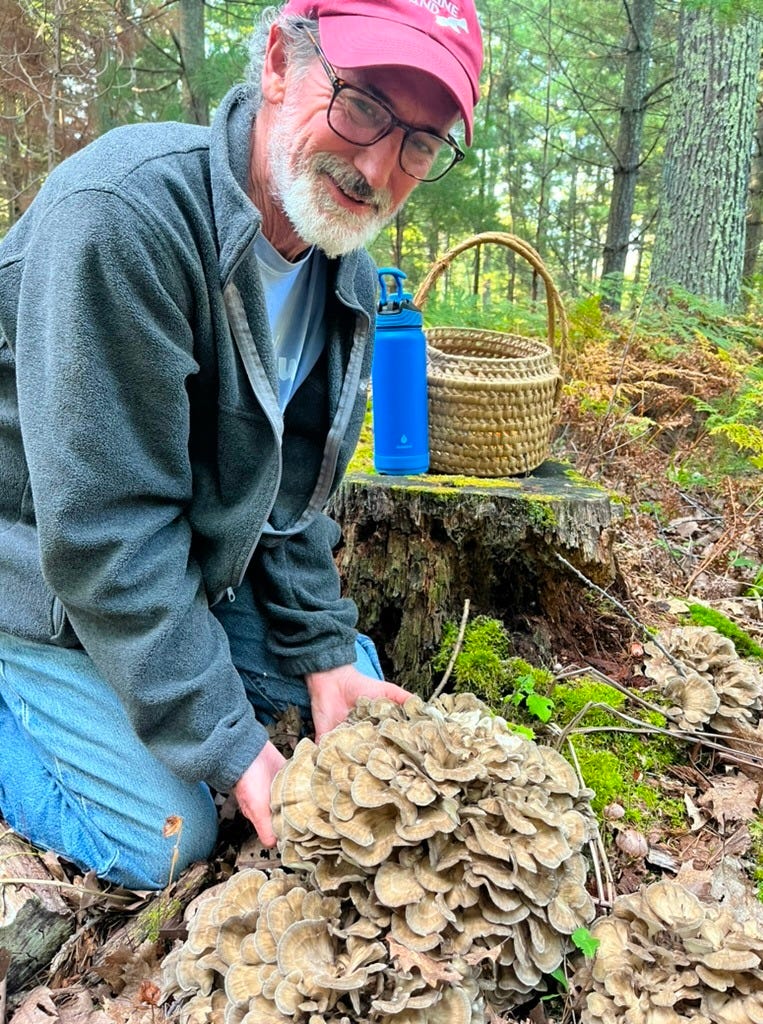
Like so many good tin
gs in my life, wild mushrooms just seem to happen, woodland gifts that appear when autumn’s earth is damp and cool and when I’m open, not hurried or worried. We cut a huge hunk at the base, leaving some for the next forager and next year’s growth, brushed off the dirt, and filled our basket, already brimming with plump orange chanterelles.
Mushrooms defy category, neither vegetable, nor fruit, nor animal, they’re fungi. They are good for the earth, breaking down debris and building top soil and good for us, too. ow calorie and ow sodium, they contain no fat or cholesterol, yet they are surprisingly high in protein… full of B vitamins, riboflavin, and niacin, a great source of selenium and potassium, and vitamin D.
Hen of the woods are the novice mushroomer’s prize, easy to cook and deliciously meaty. According to Forager Chef, Alan Bergo, they’re a wonderful substitute for beef. If you’re lucky enough to find one in the woods, just be sure to brush off the dirt and cut off the tough base before you get back to the kitchen. You can find commercially grown maitake mushrooms in our stores, but they are not as flavorful as the wild.
I like them best simply roasted. Just tear them into ruffled strands, toss with plenty of oil, sprinkle with coarse salt and coarse pepper, spread out on a parchment lined baking sheet and roast them until fully cooked and nicely crisped. They’ll be ready in about 15 to 30 minutes, to toss on a flatbread, tangle with pasta, fold into scrambled eggs.
You might also saute them in plenty of browned butter doused with white wine to tangle with pasta and pile on polenta. Whatever you do with maitake, you can do with other mushrooms. Cultivated or hunted; mushrooms are a delicious taste of the woods.
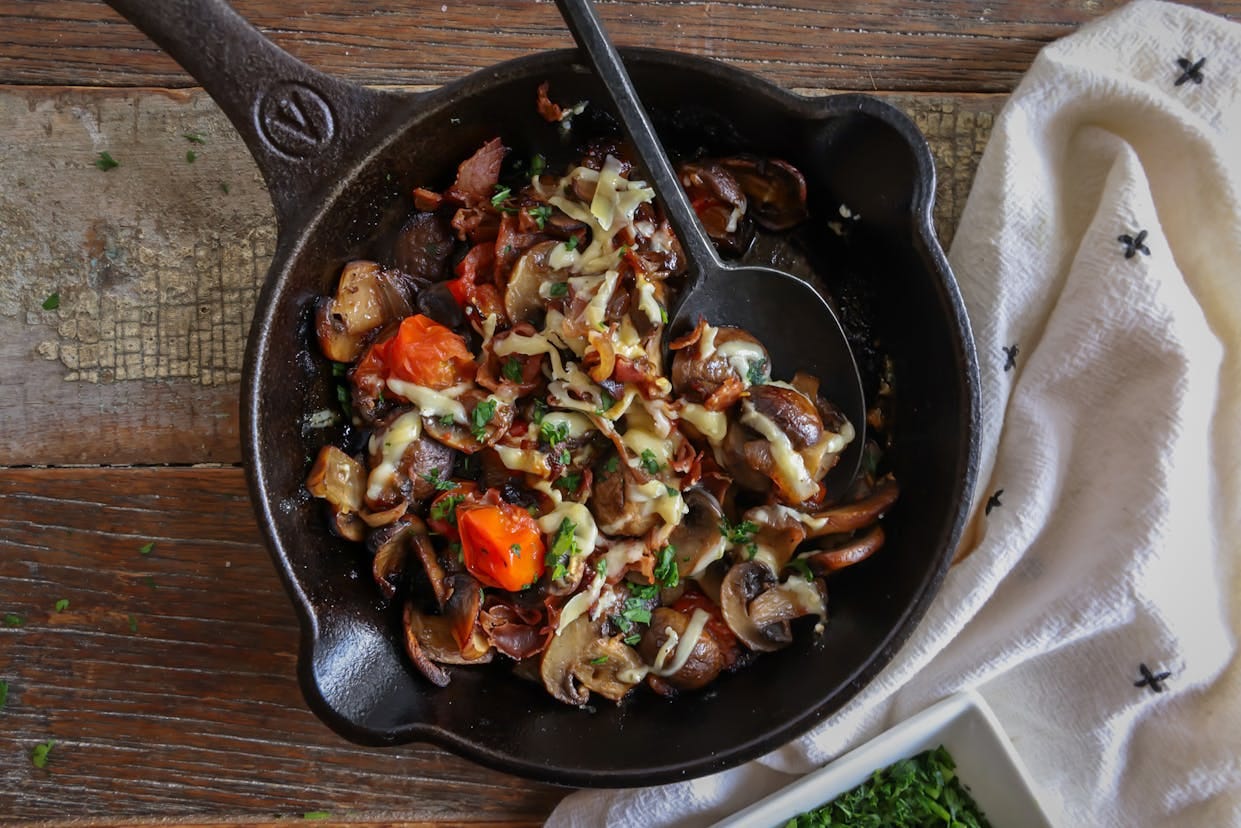
My husband works for a local park. Plenty of mushroom hunters in the woods these days. Is there anything poisonous that looks like hens that I should consider be fore eating?
I probably am overly cautious and missing a taste treat, but I'm not sure whether I can correctly identify maitake mushrooms, so have always stuck with cultivated mushrooms.